A Horse Riding Myth You Need To Know

In This Saturday Issue:

1. A Horse Riding Myth You Need To Know

2. Getting Started in Horseback Riding

*************************************************************

1. A Horse Riding Myth You Need To Know

Andy Curry discusses a common myth in horseback riding:

You know how they say sugar makes
kids hyper?

Turns out scientists cannot make a
link between sweets and hyperactivity.

Apparently, it’s a myth.

[editor’s note: They don’t know my 5 kids!]

But you know what’s “NOT” a myth?

The importance of the right saddle
when you’re riding.

If you’re an expert rider, you can
ride all kinds of saddles – still, the right
saddle for a certain job makes it easier even to an expert.

You see, most people just go get a
saddle when they’re ready to ride.

Truth is, different saddles are made
with specific purposes in mind.

And here’s the kicker.

If you’ve ever felt your riding ability is weak,
it “may” have a lot to do with your saddle.

So if you worry any that your riding
could use some work – listen to this.

The wrong saddle may be causing you
to slip around and not find your seat.

As you slip around and try to get
your bearings, you may be unknowingly tugging and jerking
on your horse causing him con- fusion.

When you confuse your horse, he can
panic.

when he panics, he doesn’t think right.

And everyone gets in trouble then.

You see, to get the right saddle, you
have to ask yourself what kind of riding you’re going to do.

There’s a different kind of saddle for
every job.

There are a few things you can pay
less on your equipment, but the saddle is something
you should never skimp on.

Let’s talk about pleasure riding
for now.

Without showing you, this’ll be a
little difficult to explain, but bear with me.

Your saddle should have an indentation
in the seat. It acts like a pocket to help hold you in.

Another good characteristic is a
saddle with rough out leather.

What’s “rough out”?

That’s where the leather isn’t smooth – it’s rough.

The cool thing about rough out
leather is it acts like velcro and helps hold you in.

Slick seated saddles are harder
to stay sitted in.

Next, the cantle.

If your cantle is low then there’s
not much there holding you in.

Why would anyone use a low cantle
saddle?

Because it’s made for a fast exit
like in rodeo competitions and such.

Next is the swells.

Those are the hump-like things
on either side of the saddle horn.

If those are low, they are meant
for a fast exit as well.

If they’re high, they’re meant to
hold you in.

How do you know if a saddle fits you?

Sit in it.

If you feel the pocket, it may be the
one you want.

If you don’t feel the pocket, you
probably don’t want that saddle.

And here’s a nifty little secret.

While sitting in the saddle, put
3 fingers between your legs and the swells.

If there’s room for your fingers,
then there’s room for you.
( As long as there’s not too much room for your fingers)

This saddle info is just part of what
you should know.

When we filmed Sue Robertson on “How To Float In The Saddle”,
she talked at length about how to find the right saddle for riding.

Plus, she shows how to hold your legs
and body – and most importantly, how to find your
seat so you can float in the saddle.

If you feel your riding could use some
help, you should watch this DVD.

Why?

Because I’ll bet the farm Sue’s information
will dramatically change your horse riding
for the better – forever.

You can read more about it by clicking
on the following:

Sue Robertson Training DVD

Remember.

The biggest thing about your saddle is
asking yourself what you’re going to do?

What is your riding purpose?

That will govern what saddle you’re
going use.

And you will be astonished how it will
change your riding ability.

Will it solve all riding troubles?

No.

But it “will” make an incredible difference.

And once you get start gettin’ the feel of good
riding, your confidence will soar!

Sue Robertson Training DVD

***************************************************************

2. Getting Started in Horseback Riding

Are you reading this because you’re just getting started or want to
start horseback riding?

Learning to ride is a lot of fun and very gratifying. You learn so much
in the process of riding, handling and grooming your horse. To
be able to control a 1,000+ lb animal full of muscle is amazing.

The bond and relationship you build with your horse just grows and
grows and you spend more time working around them and in the saddle.

Taking professional riding lessons can get very expensive.

As part of taking lessons you’ll also be learning all the basics of
how a horse is controlled, the different styles of riding, the tack,
etc. Quite frankly, there’s a ton to learn.

However, you can learn a major part of these basics before you ever
mount a horse or start lessons. That’s why we wrote the book:

“Horseback Riding: The Complete Beginner’s Guide”

Horseback Riding: The Complete Beginner’s Guide

This book takes you as beginner through all the important basic
information you need to know before you take lessons. (or as you
are starting).

Click on the link below and read more about it. This book is very
complete – it was written and edited by two certified instructors
with a combined experience of over 45 years. They know their stuff!

Click below and see if it is right for you:

Horseback Riding: The Complete Beginner’s Guide

*******************

Ok… that’s it for this Saturday. Stay safe out there!

Charlie

P.S. Our book on Horseback Riding can be purchased as a
download PDF file or in printed form. Either way it’s the
same great information that any new rider will find very
useful and will save you both time and money when starting out.

Horseback Riding: The Complete Beginner’s Guide

++++++++++++++++++++++++++++++++++++++++++++++++++++++++++++++++
Discover the most successful horse training course ever created.

“Prof. Jesse Beery’s Illustrated Course in Horse Training”

8 Volumes of pure, effective horse training wisdom
used by thousands around the world.

Printed in one, easy-to-use, spiral-bound manual.
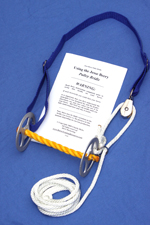
Prof. Beery’s Illustrated Course in Horse Training

Posted in General, Horse Training Tips, Horse Training Videos, Horseback Riding | Tagged , , , , , , , | Leave a comment

What 3 Dangers To Look For Before Riding Your Horse

“What 3 Dangers To Look For Before Riding Your Horse”

Here’s Andy Curry talking about getting ready to ride:

Has it ever happened to you?

You get on your horse and ride.

Throughout the ride, you just never
quite have a pleasant, quiet ride.

Ever wonder why that is?

It could be lots of things.

What I want you to get most of all
is whether or not you were in danger.

So…

Before you get on your horse, you
should do a few things first.

Like what?

Work him a little.

You don’t have to do a pre-set thing –
although I think it’s a good idea.

But more than anything, you want to
see if your horse is being compliant and willing.

If he’s not being compliant and
willing, then you’re askin’ for trouble.

If your horse is resisting, then
look for it.

If you find resistance, then you
gotta work through it.

And here’s one a lot of people don’t
think about.

Your horse may be sore.

Soreness could look like unwillingness.

If it is soreness, you have to address it.

A sore horse is one that may buck you
off immediately or after a long trail ride.

If it’s disrespect then you likely don’t want to get on –
especially if you don’t have the experience to address it.

And here’s one of the most obvious yet
ignored ones.

If you don’t have steering or brakes,
you dang sure don’t want to get on.

I know it’s obvious and I shouldn’t have to say it –
but people do it all the time.

I guess it’s because they don’t understand just how
bad they can get hurt.

These are the 3 dangers to look for before you go for
a ride and they are the ones Linda Braddy highly
recommends in her DVD.

To read about Linda, click the following:

Linda Braddy Training DVD

Don’t let the simplicity of these checkpoints fool you.

Yes, they are simple.  But they are critical to
your riding safety.

If you haven’t yet, you should get a copy of Linda’s
information because she reveals a lot a important
horse training info everyone should know.

Again, here is her link:

Linda Braddy Training DVD

——————

Have a good day…  stay safe around your horses!

Charlie

++++++++++++++++++++++++++++++++++++++++++++++++++++

Just starting out with horseback riding?  Need some professional help?

It is normal for anyone just starting out to have lots of questions,
be somewhat fearful and at times confused about how to start
and learn the right way.

That’s why we wrote:

“Horseback Riding: The Complete Beginner’s Guide”

This book takes you as a beginner, who knows nothing about horses,
and gently leads you through all phases of riding, horse care,
grooming and much more.

It completely prepares you for your first real riding lesson s
o you start with knowledge, understanding and confidence when
you mount the horse for the first time.

Horseback Riding: The Complete Beginner’s Guide

Posted in General, Horse Training Tips, Horse Training Videos, Horseback Riding | Tagged , , , , , , | Leave a comment

Horse Training: To Lunge Or Not To Lunge?

“To Lunge Or Not To Lunge”

Andy Curry discusses this…  follow along:

Lungeing.

It’s valuable.

Some trainers use it.

Some don’t.

I do.

Should you?

Depends.

On what?

How you view lungeing.

I know trainers who see lungeing as
a forced control.

Those trainers want to control the
horse’s obedience through “just” his brain and nothing else.

Should you agree with that?

Maybe…maybe not.

I see it this way.

When I lunge a horse, I’m still getting earned obedience
from him – it’s still getting into his brain that I have control.

That’s what I’m after anyway.

Lungeing can serve many purposes.

One is this.

When we filmed Danie and Doug Hewlett
for the “Reining” DVD, Danie started off by lungeing the horse.

Why?

Because she’s using lungeing as a tool
to check her horse.

Just like a scientist would use a microscope for his tool
of the trade…Danie and Doug use lungeing as “their” microscope.

Your horse will reveal many things to you if you lunge him.

For instance, Danie says she wants her horse to walk
quietly around her when she first starts.

Why?

First, a quiet horse is a calm horse.  A calm horse learns
better, is more cooperative, and therefore trains better.
(and is also safer)

But if he’s walking around, swishing his tail, shaking his
head up and down, his ears are pinning,…then you need to
figure out what’s going on.

If he’s walking around you quietly, then that’s a good
sign he’s okay with you, he’s likely not in pain, and so on.

Next, while Danie lunges the horse she will ask him
to walk, canter and lope.

When she says “walk”…he walks.

When she says “canter”…he canters.

And so on.
 
So guess what?

If he doesn’t walk, canter, or lope when you ask
him to…then you need to fix that.

Why?

Cuz he ain’t gonna know it when you’re in the saddle.

You want to teach it from the ground first.

Get all the confusing stuff outta the way and
get him knowing it before you get on.

That’s just one of the valuable things about lungeing.

There’s more that Danie reveals about lungeing.
If you want to read about it, click the following:

Danie and Doug Hewlett DVD

Here’s another reason to lunge.

When you lunge, you teach your horse to control his gait.

You never…repeat…NEVER want him telling you
what speed he’s gonna go.

Why?

Do you wanna be in the saddle with him telling
you what he’s gonna do?

Uh-uh!

Especially if you’re kinda new to this horse thing.

You dang well better have him asking you how fast
you wanna go – not the other way around.

When you push the gas pedal…he moves.

When you hit the brakes…he slows down or stops.

And that, my friend, is a small sample of why
lungeing is so valuable. 

Danie and Doug Hewlett DVD 

Ok…  there ya go.  Stay safe around your horses!

Charlie
++++++++++++++++++++++++++++++++++++++++++++++++

Discover the most successful horse training course ever created.

“Prof. Jesse Beery’s Illustrated Course in Horse Training”

8 Volumes of pure, effective horse training wisdom used by
thousands around the world. 

Printed in one, easy-to-use, spiral-bound manual.
Jesse Beery Illustrated Course in Horse Training

Posted in General, Horse Training Tips, Horse Training Videos, Horseback Riding | Tagged , , , , | Leave a comment