Horseback Riding: The Rider’s Position

Today’s Tip:  “The Rider’s Position”

Horseback riding takes some muscle as well as brain power.

You don’t have to be Arnold Schwarzenegger nor do you need
to be a brain surgeon, but you do need to be ready to break
a sweat and think about what you need to do.

One of the first things a new rider will learn is the
basic rider’s position.

In the English saddle, the rider sits with her ear,
shoulder, hip and heel in a vertical line so that her
shoulders are over her hips and her lower leg comes under her.

Her heel is down, but not forced so that the leg juts forward.

Her back is straight and by lifting from the
sternum her shoulders go back.

Her elbows are bent and at her side and upper
arm against her rib cage.

The hands are low, near the horse’s wither to create a straight
line through the reins to the horse’s mouth. Hands are closed
in a fist around the reins, and the thumbs are turned upward.

To get an idea of the basic position before you get on a horse,
stand in modified horse stance while you are on the ground.

Spread your feet apart until they are about as wide across
as your shoulders (or slightly wider).

Bend your knees and lower your hips downward. Keep your back
straight and your shoulders over your hips.

Look down and take note of how your feet are under your hips.

When you are in the saddle, this is close
to the position you’ll take.

In fact, when you are in the saddle, if you imagine a
giant’s hand plucking you up out of the saddle by your
shoulders and putting you on the ground, would you be
able to hold the position or would your feet be too
far in front of you?

Trying to maintain it while steering or trotting your
horse will be a challenge in the beginning, and you’ll
need to mentally remind yourself to correct your position.

For more on the rider’s position, refer to the detail
found in our popular book:

“Horseback Riding: The Complete Beginner’s Guide”

Get Your Copy of the Horseback Riding Book

That’s today’s tip….  stay safe around your horses!

Charlie

Posted in General, Horseback Riding | Tagged , , , , | Leave a comment

Does your horse react or respond? Why it matters.

“Does your horse react or respond?  Why it matters.”

Here’s Andy Curry discussing an important basic about
how your horse responds:

It’s weird.

The ‘possiblity’ of something happening to you vs. it
actually happening seems scarier.

Not sure why that is.

Perhaps it’s because our imaginations
run wild with the ‘what if’s’.

But did you know, horses are a lot
like this too?

Horses have a BIG imagination.

To see it, all you have to do is
watch their reaction when they see a plastic bag
rolling across the ground in front of them.

Years ago I was riding my horse behind
my house and she stopped.

She wouldn’t go forward either – not for all the
hay in the world.

Funny thing is, I couldn’t figure out
what was spookin’ her.

I knew something was but I couldn’t
see or hear a thing.  Pretty typical.  After all,
horses have way better hearing than we do.

Plus, their sight is designed like
radar.  It’ll pick up little blips we miss.

Anyway, after I unsuccessfully tried
talkin’ my horse into going forward, I got off.

I couldn’t even get her to walk a
big circle around it.

And she wasn’t about to go forward
or anywhere near the direction we ‘were’ going.

So I climbed off and walked her forward with me.

There’s something magical about that
at times.

You can walk in front of your horse
toward a spooky object and they’ll often go with
you – albeit still scared.

Anyway, as we got closer I could hear
a sound but couldn’t quite make it out.

We got a little closer and then I
could hear what sounded like wind – sort of.

Even closer, I discovered the headgate
was open the field was being irrigated.

The water rushing out from the canal to the headgate
was making a gushing sound.

That’s what seized my horse’s brain – the sound
of rushing water.

Funny thing is, I had to get a 100 feet closer to
it to even hear a faint sound from it.

She heard it WAY before I did.

And here’s the thing.

You and I know it was just water.  We
were able to reason that.

She didn’t know what it was.

All she did was react.

Her imagination went wild because, in
her mind, ‘Who knows what that sound was.’

She was mostly concerned it was coming
to get her.

Now one reason I told you this is to
demonstrate how in-tune horses are to noise.

They are also sensitive to movement – but that’s
not my discussion today.

It’s the noise thing I wanna hit for a
minute.

When we filmed Kenny Scott, he was showing a very
green horse at the beginning of the DVD.

Kenny said there are times the horse stops and when
he does, you have to urge him forward.

And here’s the kicker.

If we have to urge him forward, we can create a
swat to the horse.

No,…we’re not hitting him.

Rather, we’re making a noise.

Remember my story about the headgate and the
canal and how horses are sensitive to noise?

You can use that as a tool to help work with your horse.

As I said, horses respond to noise.

BUT!……

They ‘react’ to pain.

We want our horse to respond…not react.

A broke horse is a response.

A scared horse is a reaction.

Make sense?

It’s one of those tricks you learn as you keep
working with horses and learn from others.

This particular one came from Kenny Scott as
I said earlier.

I urge you to read more about Kenny and his
methods if you haven’t already.

Go to:

Get Your Copy of the Kenny Scott DVD HERE

Be careful when urging your horse forward with noise.

If he’s not used to it, you could get into a wreck.

So follow the rule of doing as little as you
need to…but as much as it takes.

Get Your Copy of the Kenny Scott DVD HERE

Onward….  stay safe around your horses!

Charlie

Posted in General, Horse Training Tips, Horse Training Videos, Horseback Riding | Tagged , , , , | Leave a comment

What Dr. Phil Might Ask You About The Whoa In Your Horse

1. What Dr. Phil Might Ask You About The Whoa In Your Horse

2. How To Get Started In Horseback Riding

****************************************************************

1. What Dr. Phil Might Ask You About The Whoa In Your Horse

Here’s trainer Andy Curry discussing what Whoa means:

Every trainer I’ve worked with has
agreed on the same thing.

When it comes to ‘Whoa’, it means stop.

Not ‘slow down’.

Not ‘Wait!…I’m about to fall off.’

Nope.

It means stop.

When we filmed Diana Quintana her remark was:

‘Whoa means STOP NOW!, Drop Dead,
die right here…RIGHT NOW!’

There are various ways of teaching
a horse to stop.

But I want to touch on a few mistakes
that are often made when teaching it.

The first mistake is asking the horse
to stop when you first get him in the pen.

Heck, the horse is fresh.  So you gotta get
the fresh off him.

One way to do that is let them work
for a bit.

After you’ve worked the horse they’re
going to appreciate the stop.  In fact,
they’re going to want it.

They DON’T want it while they’re fresh.

Another mistake made is pullin’ on them with the reins.

I’ve gotten emails from people who’ve
said things like, ‘My horse wouldn’t stop
and I was pulling on the reins like crazy.’

My first question to that horse owner
would be, ‘If it’s not workin’ for you,
don’t you think you should try something else?’

It’s true.

Dr. Phil always asks, ‘How’s that workin’ for ya?’

If it’s not, then cut it.

If it is, then use it. (Provided it’s
humane, of course.)

So getting a horse to stop is not about pulling on the reins.

Besides, your horse will out-pull you
and you’ll teach him to lean on the bit.

Instead, use your seat.

Quit riding when you wanna stop.

Try this.

Next time you’re on your horse, just
sit in the saddle.

Pretend someone threw a ball to you
and it went right to your stomach.

As you catch it, your stomach will
kind of go backwards and your hips forward.

How’s that for a description of what
your seat should be like?

If you can, try it out on your horse.

Remember to take the fresh off him first.

The next thing I want to point out
is something that seems small…but critical.

After you stop your horse, count to 10.

Why?

Because it gives you a gauge on how
long to wait before moving your horse
again and, most importantly…

‘It lets your horse
know what a stop is.’

This ‘Count to 10’ rule is one of the
many things Diana Quintana reveals in her
DVD about her 30 day horse training regiment.

If you want to know more about her
methods, click on the following:

Read More About Diana Quintana’s DVD HERE

Remember.

Stop means stop.

Whoa means whoa.

Whoa means don’t move those legs – STOP!

Read More About Diana Quintana’s DVD HERE

************************************************************

2. How To Get Started In Horseback Riding

Lots of you who receive this email magazine have years of
riding experience.  so this is not for you.

If, however, you are just starting out, or want to get
started and haven’t yet, then listen up.

Dozens, actually hundreds, of folks ask how to get started
riding.

Like so many of us as a kid (and many later in life) we dreamed
of starting to ride but either didn’t have time, money or
even the opportunity to start riding.

Some folks have a real desire to ride but feel pretty scared
around those 1,200 pound animals full of muscle and speed!

But that is often what lures many into riding:  the fact
that you can be in control of such a magnificent animal
and enjoy riding for all kinds of different purposes.

Do you just want to have fun riding in a ring, or
strike out trail riding, endurance riding, barrel racing,
roping, cutting, dressage, or a whole list of other
riding disciplines?

It doesn’t matter what your interest is today.

It all starts with the basics.

I urge you to take lessons from a qualified instructor
or trusted friend who knows and handles horses well.

but if you’re just starting out you need lots of
background information about types of horses,
breeds, how to care for them, how they think,
how to control them, etc.

Most of this basic information you can learn from
the comfort of your own home.

Lessons from a qualified instructor are usually
pretty expensive.  Why pay them their expensive rate
to learn the basics that you can learn on your own
at your own pace at home?
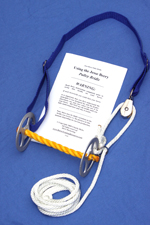
Read about “Horseback Riding: The Complete Beginner’s Guide”

This is exactly why we wrote our book:

“Horseback Riding: The Complete Beginner’s Guide”

It was authored and edited by two certified
instructors with over 45 years of experience.

It covers all the basics you’ll need to know
before you ever mount for the first time.

It will save you money and will make you much
more confident as you start to ride.

Follow that dream.  But learn all you can
before you start lessons.  You’ll be glad you did!

The book comes in both a money-saving PDF eBook format
or as a printed book mailed to you.

Read about “Horseback Riding: The Complete Beginner’s Guide”

*********************************

Ok.. that’s if for today.  Stay safe around your horses!

Charlie

++++++++++++++++++++++++++++++++++++++++++++++++++++++++++++++++++

Discover the most successful horse training course ever created.

“Prof. Jesse Beery’s Illustrated Course in Horse Training”

8 Volumes of pure, effective horse training wisdom used by
thousands around the world.

Printed in one, easy-to-use, spiral-bound course manual.

Jesse Beery’s 8 Volume Illustrated Course In Horse Training

++++++++++++++++++++++++++++++++++++++++++++++++++++++++++++++++++

Posted in General, Horse Training Tips, Horse Training Videos, Horseback Riding | Tagged , , , , | Leave a comment